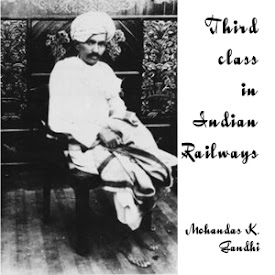
Third Class in Indian Railways
von Mahatma Gandhi
Gelesen von LibriVox Volunteers
In Third Class in Indian Railways, Mahatma Gandhi examines the conditions faced by passengers travelling in the lowest class of India’s railway system. Drawing on his own observations, he describes overcrowding, poor sanitation, and the unequal treatment of Indian travellers.
Written in 1917, the work is a pointed piece of social and political criticism. Gandhi looks beyond individual discomfort to question the practices and public attitudes that allow such conditions to persist.
Brief and direct, it offers a historical account of everyday travel as well as a window into Gandhi’s approach to reform: close attention to ordinary people’s experiences, followed by a call for responsibility and change.
Kapitel
Select a chapter to play
| Third Class In Indian Railways | 12:32 | Gelesen von Graeme Dunlop | |
| Vernaculars as Media of Instruction | 5:38 | Gelesen von Graeme Dunlop | |
| Swadeshi | 23:13 | Gelesen von Graeme Dunlop | |
| Ahimsa | 9:05 | Gelesen von Kathryn Lois | |
| The Moral Basis of Co-operation | 16:10 | Gelesen von Kathryn Lois | |
| National Dress | 4:48 | Gelesen von Availle |
Bewertungen
Good reading, interesting book.


Lucy_k_p
Thank you to all the readers, you all do a great job, every section is clear, understandable and easy to listen to. Some interesting pieces of writing. It's interesting to learn more about the situation in India and Gandhi's personal philosophy. I don't agree with everything he says (I dislike it when religion and morality are conflated) but there are some things worth thinking about.
gandhi's views about world.
Himanshu Gehlot
helped me to understand about the situations and thinking before indian independence.
Paul Billingham
very well read. Ghandii was finding hifeet with this
Thank You .
Pushkar17
It was a great experience . Near perfect reading . Await a reading of My Experiments with Truth among others
Beth E
Thank you so much for offering these important pieces of Gandhi's writing which help us to understand the man and his philosophy
nice selection
adam
This is a nice selection of short pieces that give a sense of Ghandis thinking and philosophy. Thank you.
A LibriVox Listener
5* for readers. The collection is not so good
excellent
Dr. Mukesh Punia
I enjoyed a lot. Thanks to readers.